Aluminum Coil Anodizing Process: International Trends and Development Outlook
Release time:
2025-07-05
Source:
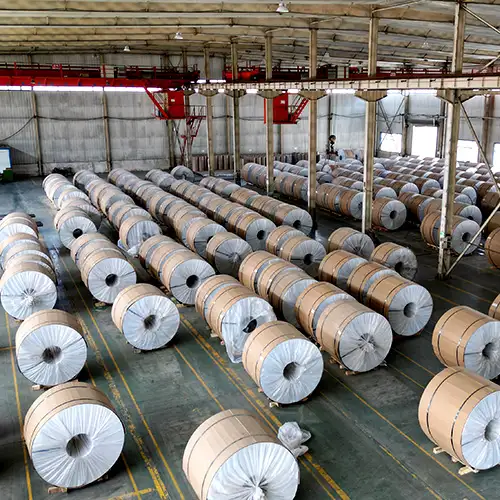
Against the backdrop of the global manufacturing industry's continuous pursuit of high-performance, sustainable material solutions, the aluminum coil anodizing process is undergoing profound changes, presenting a series of eye-catching international trends.
Against the backdrop of the global manufacturing industry's continuous pursuit of high-performance, sustainable material solutions, the aluminum coil anodizing process is undergoing profound changes, presenting a series of eye-catching international trends. This surface treatment technology not only gives aluminum coils excellent corrosion resistance, wear resistance and decorative properties, but also plays an indispensable role in many fields such as construction, transportation, and electronics.
The market size continues to expand, and the application areas continue to expand
According to HengCe research data, the global anodized aluminum coil market size in 2024 is approximately US$412 million, and is expected to climb to US$609 million by 2031, with a compound annual growth rate (CAGR) of 6.1% during 2025-2031. This steady growth trend is due to the wide application of anodized aluminum coils in many fields. In the field of architectural decoration, its excellent fire resistance, decorativeness and durability make it an ideal material for building components such as curtain walls, ceilings, doors and windows; in the manufacture of electrical housings, the good insulation and corrosion resistance of anodized aluminum coils can effectively protect the internal circuits and improve product safety and service life; in the transportation industry, the demand for lightweight has led to the extensive application of anodized aluminum coils in automobile bodies, aerospace components, etc., which not only reduces weight but also enhances the weather resistance of structural parts; the handicraft and furniture industries use its diverse colors and surface textures to enhance the artistic value and market competitiveness of products.
Technological innovation drives process upgrades
Development of efficient and energy-saving technology: In response to the global trend of energy conservation and emission reduction, the anodizing process is moving towards efficient and energy-saving. New power supply technologies, such as pulse power supplies, are increasingly widely used. Compared with traditional DC power supplies, pulse power supplies can increase the film formation speed and reduce energy consumption while ensuring the quality of the oxide film. By optimizing the pulse parameters, the growth process of the oxide film can be accurately controlled, making the film structure more compact and the performance significantly improved. For example, the EOE-88 series pulse power supply with pulse wave has rich pulse components in its output voltage and current, which is equivalent to 300 small pulse waves superimposed on the DC wave per second, which greatly speeds up the film forming speed, especially suitable for large-scale industrial production, and effectively reduces the production cost.
The rise of composite anodizing technology: As a cutting-edge technology, composite anodizing has received widespread attention in the industry in recent years. This technology adds magnetic powders such as Fe₃O₄, CrO₂, TiO₂, superhard powders such as Al₂O₃, SiC, Si₃N₄, and conductive powders such as graphite (micrometer level) to the electrolyte, so that they are suspended in the electrolyte for anodizing. In Japan, the research of scholars such as Yoshimura Nagakura shows that this process has the advantages of simple operation, low equipment requirements, and low cost. Compared with conventional anodizing, it can not only significantly increase the oxidation speed, but also increase the upper limit of the operating temperature and improve the performance of the film layer. For example, Al₂O₃ powder can more than double the hardness and corrosion resistance of the oxide film formed by aluminum profiles in H₃PO₄ solution, opening up a new development path for the anodizing process of aluminum coils.
Environmentally friendly processes have become mainstream: With the increase of environmental awareness, clean anodizing processes have received more and more attention. Europe and Japan have begun to adopt closed-loop recycling technology for waste liquid in each process of anodizing production, gradually achieving low emissions and even zero emissions (zero-discharge). This measure not only reduces pollution to the environment, but also reduces the consumption of raw materials and improves resource utilization. In the chemical pretreatment link, from an environmental perspective, low-chromium and chromium-free chemical conversion treatment technologies have become research and development hotspots. Using anodized film as the bottom layer of powder spray coating can not only overcome the problem of filamentary corrosion, but also replace traditional chromization treatment, which meets the requirements of sustainable development.
Global competition pattern and regional development trend
Currently, Asia is the world's largest anodized aluminum coil production region, occupying a large market share, followed by Europe and North America. In the next six years, Germany is expected to continue to maintain its leading position in Europe, and the CAGR will maintain a certain growth from 2025 to 2031. These leading companies have an advantageous position in the global market competition with advanced technology, large-scale production capacity and a complete sales network. At the same time, companies in emerging economies are also continuously increasing their R&D investment, improving their technology level, gradually narrowing the gap with international giants, and promoting the competition landscape of the global anodized aluminum coil industry to develop in a more diversified direction.
Looking to the future, the anodizing process of aluminum coils will continue to improve product performance and expand its application areas driven by technological innovation, while paying more attention to environmental protection and sustainable development. With the continuous growth of global market demand, this industry is expected to usher in a broader development space, providing strong support for the upgrading and progress of related industries.
Related News
Shining 2025 China International Aluminum Industry Exhibition
From July 9 to 11, 2025, the highly anticipated 20th China International Aluminum Industry Exhibition will be held in Shanghai New International Expo Center.
The aluminum wire drawing process is a commonly used metal processing process in which aluminum is stretched and extruded to form the desired shape and size.
Aluminum plate types Aluminum plate usage guide
The 1 series aluminum plate model is the key raw material for manufacturing the bottom reflector of the heat pipe of solar water heater.
3 series aluminum plate material and model
The 1 series aluminum plate model is the key raw material for manufacturing the bottom reflector of the heat pipe of solar water heater.
1 series aluminum plate related knowledge
The 1 series aluminum plate model is the key raw material for manufacturing the bottom reflector of the heat pipe of solar water heater.
1mm aluminum plate The use of 1mm aluminum coil
1mm aluminum plate and 1mm aluminum coil have a wide range of applications in many fields because of their moderate thickness
Can't find the product you need?
Please contact us to provide you with satisfactory products and become a reliable supplier and service provider in the industry
Contact Us
Address: Gongyi City, Henan Province,China