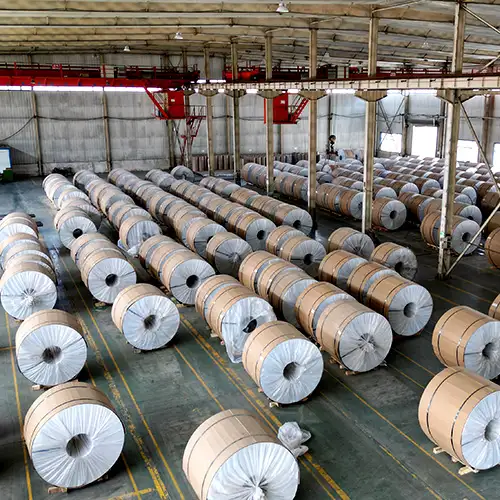
Anodized aluminum coil VS Roll-coated aluminum coil: which is your favorite?
Release time:
2025-08-12
Source:
In the vast world of metal materials, anodized aluminum coil and roll-coated aluminum coil are like two shining stars, each radiating its own unique brilliance.
In the vast world of metal materials, anodized aluminum coil and roll-coated aluminum coil are like two shining stars, each radiating its own unique brilliance. They are widely used in a wide range of fields, including construction, electronics, and home appliances. Today, let's take a deeper look at these two materials and explore their differences.
I. Process Secrets
Anodized aluminum coil: The magic of electrolysis creates a protective film
The creation of anodized aluminum coils relies on the magical power of electrolysis. An aluminum coil is immersed in an electrolyte solution such as sulfuric acid, chromic acid, or oxalic acid, making it the anode. When an electric current is applied, a miraculous transformation begins on the surface of the aluminum metal: an oxidation reaction occurs, naturally forming a protective aluminum oxide film. This film is typically 5-20 microns thick, but with hard anodizing, the thickness can soar to 60-200 microns. Furthermore, this is more than just an additional layer; it adheres tightly and resists easy detachment.
Roller-Coated Aluminum Coil: Efficient Coating Creates a Colorful Appearance
The production process of roller-coated aluminum coil is relatively down-to-earth. First, the aluminum sheet undergoes degreasing and chemical treatment to clean the surface, laying the foundation for subsequent painting. Next, the coating is evenly applied to the aluminum sheet using a roller, and then cured at high temperature to form a film. Roller coating uses a wide variety of coatings, including acrylic, polyester, fluorocarbon, and nano-coating, to meet the coating performance requirements of various applications.
II. Performance Comparison
Anodized Aluminum Coil: Hardcore Performance
Extreme Corrosion Resistance: This protective aluminum oxide film acts as a loyal guardian, protecting the aluminum coil from external corrosion. It has remained corrosion-resistant for thousands of hours in ω=0.03 NaCl salt spray, and remains stable in locations ranging from humid seaside locations to chemically contaminated areas.
Excellent Hardness and Wear Resistance: Anodized aluminum coils achieve significantly increased hardness, reaching 250-500 kg/mm², capable of withstanding frequent friction and impact, making them ideal for applications requiring high wear resistance, such as mechanical parts and engine cylinders.
Excellent Insulation: With a breakdown voltage of up to 2000V, it is an ideal material for electrical components and electronic device casings, ensuring electrical safety.
Unique Decorative Features: While not as versatile as roller-coated aluminum coils, anodized aluminum coils can be colored within the micropores of the oxide film through a special process, creating a natural, rustic metallic luster that enhances a modern metallic look and enhances the product's quality. Anodized aluminum coils with a standard oxide film thickness (3μm) will not discolor or corrode under long-term indoor use, while those with a thicker oxide film (10μm) can withstand long-term outdoor sunlight exposure without fading.
Excellent Fire Resistance: As a pure metal product, the surface is free of paint or other chemical substances. It will not burn at temperatures of 600°C and does not produce toxic gases, meeting strict fire and environmental protection requirements. Strong stain resistance: It leaves no fingerprints or stains, making daily cleaning easy and simple, and it also avoids corrosion spots.
Roller-coated aluminum coil: A perfect balance between color and cost
Rich and diverse colors: Thanks to a variety of coatings and advanced roller coating technology, roller-coated aluminum coil can achieve a variety of vibrant and rich colors, and can also simulate wood grain, stone grain, brushed, mirrored, and iridescent effects, fully satisfying designers' creativity and consumers' pursuit of personalization.
High surface flatness: The roller coating process is an automated, continuous operation, ensuring a uniform and smooth coating with minimal film thickness error of only 0.5 microns, resulting in an excellent finished product appearance.
Clear cost advantages: The relatively simple production process allows for rapid, high-volume production, reducing production costs. It offers a highly cost-effective solution for large-scale building exteriors, interior decoration, and other projects.
Excellent adhesion and durability: With proper initial aluminum sheet preparation, the roller-coated coating maintains strong adhesion and maintains its beauty and performance for extended periods under normal operating conditions. 3. Different Application Areas Have Their Occupations
Anodized Aluminum Coil: The First Choice for High-End and Durable Applications
Architecture: Commonly used in curtain walls and interior wall decorations for high-end buildings, its excellent weather resistance and unique metallic texture ensure that buildings maintain their elegant appearance over time. Landmark buildings often choose anodized aluminum coil to highlight their quality.
Electronics: Electronic equipment casings and electrical panels require high levels of material hardness, insulation, and aesthetics. Anodized aluminum coil meets these requirements, protecting internal electronic components while enhancing the overall quality of the product.
Aerospace: With its excellent corrosion resistance, high strength, and lightweight properties, anodized aluminum coil plays a vital role in the manufacture of aircraft components, ensuring aviation safety and performance.
Roller-Coated Aluminum Coil: A Widely Popular and Practical Choice
Building Exterior Walls and Roofs: Roller-coated aluminum coil is used for large-scale building exterior walls and roofs, enabling a rich variety of color designs while maintaining cost control and facilitating quick and easy installation. Interior Decoration: From ceilings and walls to furniture and cabinet panels, roll-coated aluminum coil, with its diverse colors and excellent decorative effects, creates a warm and comfortable indoor environment.
Advertising and Signage: When creating billboards and signage, roll-coated aluminum coil can create eye-catching colors and clear patterns, attracting attention.
IV. Cost Considerations
Anodized aluminum coil is relatively expensive due to its complex production process involving electrolytes, electrolytic equipment, and a long production cycle. However, its excellent performance makes it highly sought after in applications requiring the highest quality.
Roll-coated aluminum coil, with its efficient production process and relatively simple procedures, offers significant cost advantages in large-scale production. It is an attractive option for projects with limited budgets that require aesthetics and certain performance.
Anodized aluminum coil and roll-coated aluminum coil each have their own advantages. When choosing between the two, consider factors such as the specific needs of the project, budget constraints, and the operating environment. If you are looking for ultimate durability, high-end decorative effects and special performance, anodized aluminum coils are undoubtedly the best partner; if you focus on color diversity, cost control and wide application adaptability, roller-coated aluminum coils can do the job perfectly.
Related News
Shining 2025 China International Aluminum Industry Exhibition
From July 9 to 11, 2025, the highly anticipated 20th China International Aluminum Industry Exhibition will be held in Shanghai New International Expo Center.
The aluminum wire drawing process is a commonly used metal processing process in which aluminum is stretched and extruded to form the desired shape and size.
Aluminum plate types Aluminum plate usage guide
The 1 series aluminum plate model is the key raw material for manufacturing the bottom reflector of the heat pipe of solar water heater.
3 series aluminum plate material and model
The 1 series aluminum plate model is the key raw material for manufacturing the bottom reflector of the heat pipe of solar water heater.
1 series aluminum plate related knowledge
The 1 series aluminum plate model is the key raw material for manufacturing the bottom reflector of the heat pipe of solar water heater.
1mm aluminum plate The use of 1mm aluminum coil
1mm aluminum plate and 1mm aluminum coil have a wide range of applications in many fields because of their moderate thickness
Can't find the product you need?
Please contact us to provide you with satisfactory products and become a reliable supplier and service provider in the industry
Contact Us
Address: Gongyi City, Henan Province,China