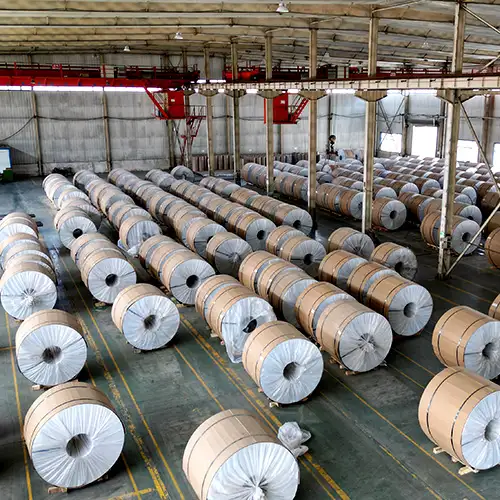
Anodized Aluminum Sheets: A Key Material Empowering the Solar Industry
Release time:
2025-09-03
Source:
In the global transition to clean energy, solar energy efficiency and equipment durability are key concerns.
In the global transition to clean energy, solar energy efficiency and equipment durability are key concerns. Anodized aluminum sheets, with their unique physical and chemical properties, have become a key material for photovoltaic (PV) and concentrated solar power (CSP) systems, providing comprehensive support for stable equipment operation.
I. Core Characteristics of Anodized Aluminum Sheets: An Innate Advantage for Solar Applications
Through an electrochemical oxidation process, a dense aluminum oxide film forms on the surface of the aluminum alloy, endowing the material with three core advantages, making it suitable for harsh outdoor environments:
Extreme Weather Resistance: Resists UV rays, temperature swings from -40°C to 80°C, high humidity, and acid rain, addressing the susceptibility of ordinary aluminum alloys to oxidation and corrosion.
Excellent Thermal Management: The oxide film provides thermal insulation, while the substrate conducts heat, enabling bidirectional adjustment.
Customizable Optical Properties: By adjusting process parameters, the material can achieve either high reflection or selective absorption of sunlight, adapting to different scenarios.
II. Role in Solar Photovoltaic (PV) Systems: Protecting Module Lifespan and Power Generation Efficiency
Anodized aluminum sheet is primarily used in module frames, brackets, and inverter housings, providing both protection and efficiency enhancement:
PV module frames: High strength and corrosion resistance ensure long-term deformation and rust resistance, while lightweight design reduces installation and load-bearing costs.
PV brackets: Require no additional corrosion protection, offer a 25-30 year lifespan, and are easily workable, making them suitable for rooftop and tracking applications.
Inverter housings: The oxide film provides thermal insulation and the base material dissipates heat, ensuring stable operation from -30°C to 50°C. The oxide film's breakdown voltage exceeds 1500V, enhancing safety.
III. Role in Concentrated Solar Power (CSP) Systems: Optimizing Light Absorption and Heat Utilization Efficiency
Concentrated solar power systems require higher material resistance to high temperatures and optical properties. Specially treated anodized aluminum sheets play a key role:
Heat Absorber: Doped with elements such as nickel and cobalt, they achieve a solar absorption rate exceeding 90% and an infrared emissivity below 10%, ensuring a working temperature of 300-500°C and improving conversion efficiency.
Mirror Bracket: Long-term resistance to temperatures exceeding 150°C, resisting environmental corrosion in deserts and plateaus, and preventing bracket deviation from affecting focusing accuracy.
IV. Future Outlook: Technological Upgrades Drive Wider Applications
As the solar energy industry develops toward "high efficiency, low cost, and long life," anodized aluminum sheet technology continues to advance:
Micro-arc oxidation processes produce 50-100μm thick oxide films, suitable for next-generation molten salt CSP power plants operating at 700°C.
Nano-coating composite technology integrates "structural support and optical optimization," reducing the cost of photovoltaic modules.
A recycling rate exceeding 95%, in line with low-carbon development. Global photovoltaic installed capacity is expected to exceed 1.5TW by 2030, further increasing demand for materials.
In summary, anodized aluminum panels serve as both a protective barrier and a performance engine for solar equipment, providing technical support for the global "dual carbon" goals.
Related News
Shining 2025 China International Aluminum Industry Exhibition
From July 9 to 11, 2025, the highly anticipated 20th China International Aluminum Industry Exhibition will be held in Shanghai New International Expo Center.
The aluminum wire drawing process is a commonly used metal processing process in which aluminum is stretched and extruded to form the desired shape and size.
Aluminum plate types Aluminum plate usage guide
The 1 series aluminum plate model is the key raw material for manufacturing the bottom reflector of the heat pipe of solar water heater.
3 series aluminum plate material and model
The 1 series aluminum plate model is the key raw material for manufacturing the bottom reflector of the heat pipe of solar water heater.
1 series aluminum plate related knowledge
The 1 series aluminum plate model is the key raw material for manufacturing the bottom reflector of the heat pipe of solar water heater.
1mm aluminum plate The use of 1mm aluminum coil
1mm aluminum plate and 1mm aluminum coil have a wide range of applications in many fields because of their moderate thickness
Can't find the product you need?
Please contact us to provide you with satisfactory products and become a reliable supplier and service provider in the industry
Contact Us
Address: Gongyi City, Henan Province,China